Ubiquity 2026 of the College of Science and Technology is themed “Globalizing Innovation: Bridging Computer Disciplines and Sustainable Development Goals for Resilient Communities”
Join us in this significant activity this coming May 18-19, 2026 at the Juliana’s Hall, Pitstop Hotel, Alaguisoc, Jordan, Guimaras.
We are honored to welcome distinguished Keynote Speakers from Institut Teknologi Dan Bisnis Stikom Bali:
- Prof. Dr. Evi Triandini, International Expert Staff
- Dr. Ir. Paula Dewanti, Lecturer
Joining us as well are esteemed representatives from Romblon State University:
- Mr. Dave Lota, Instructor II and Head of the SDG Center – International Relations Office
- Ms. Preexcy Tupas, Assistant Professor II and RDI Chairperson
In Addition, we have invited recognized a DICT Officer, Experts in IT Research, Intellectual Property, and Knowledge Management and Technology Transfer to provide a comprehensive and holistic perspective on Research and Development. Their collective insights will enrich the discourse and strengthen our commitment to advancing innovation and academic excellence.
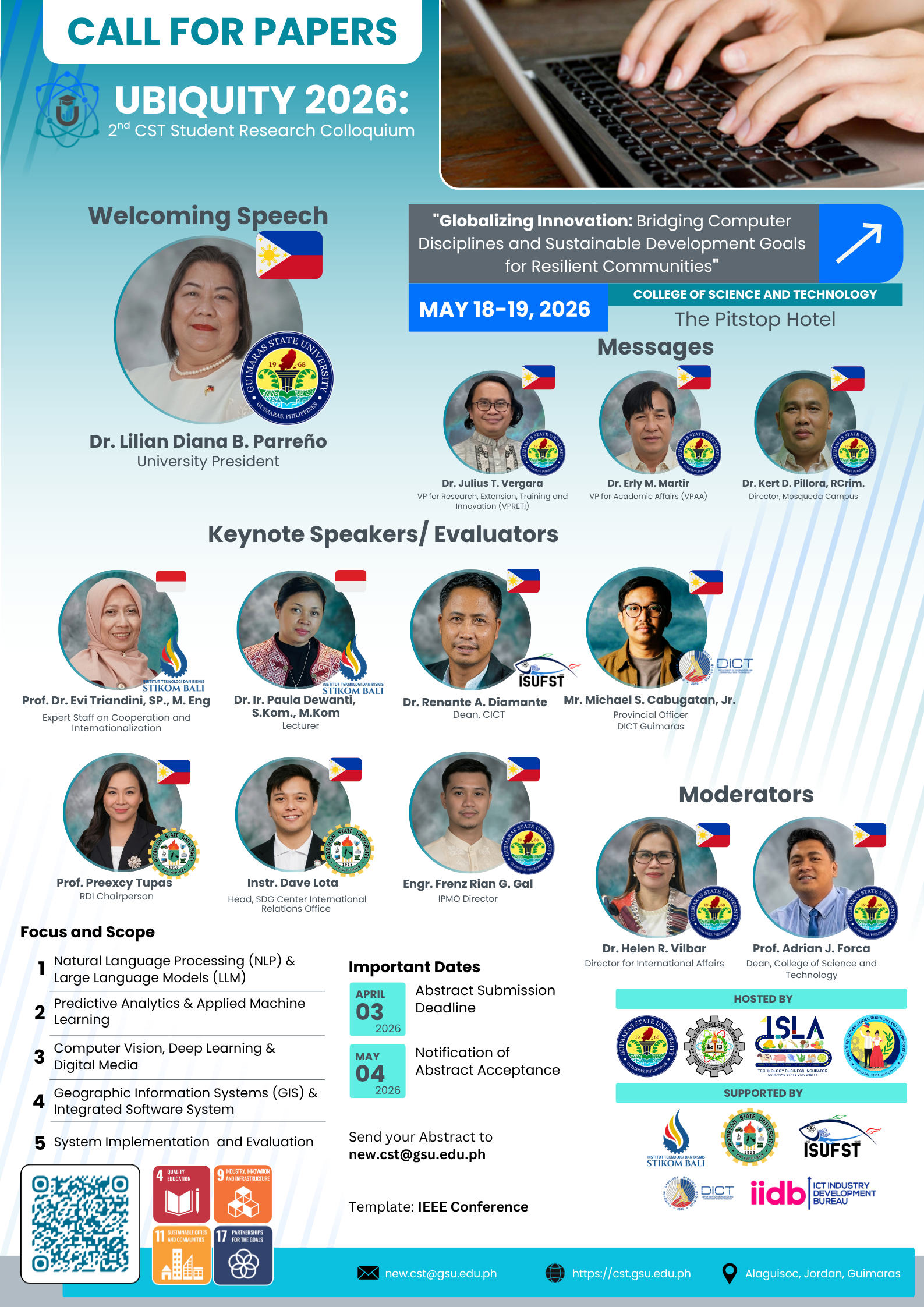
Important Dates:
May 18-19, 2026 – Colloquium Proper
April 30, 2026 – Abstract Submission Deadline
May 4, 2026 – Notification of Abstract Acceptance
Send your Abstract to new.cst@gsu.edu.ph
Focus and Scope
Natural Language Processing (NLP) & Large Language Models (LLM)
Predictive Analytics & Applied Machine Learning
Computer Vision, Deep Learning & Digital Media
Geographic Information Systems (GIS) & Integrated Software System
Book of Abstract
Access all the necessary information about the colloquium in this section
Download Presentation Template
Meet our Invited Speakers
Our set of Invited Speakers suite are experts in the field of Research ranging from seasoned Research Management, IT Research and Intellectual Property to Knowledge and Technology Transfer.
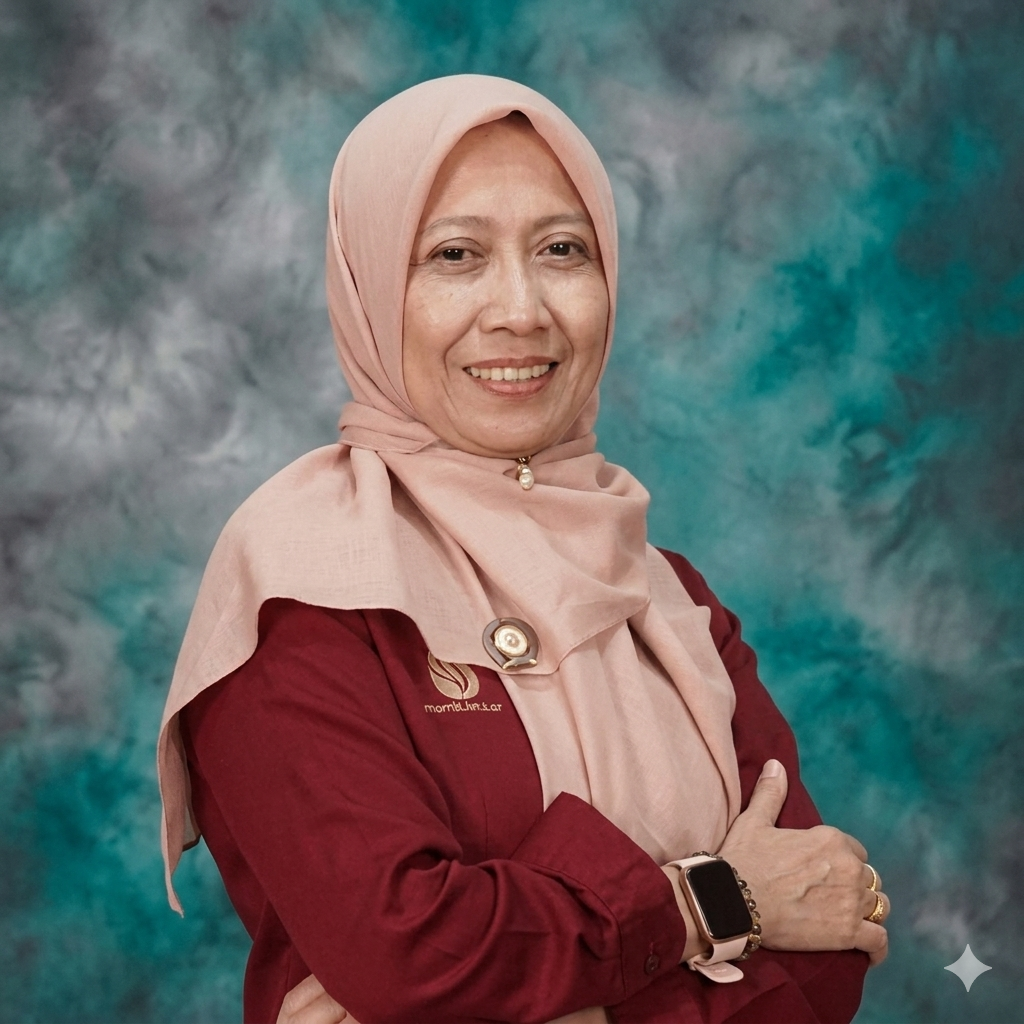
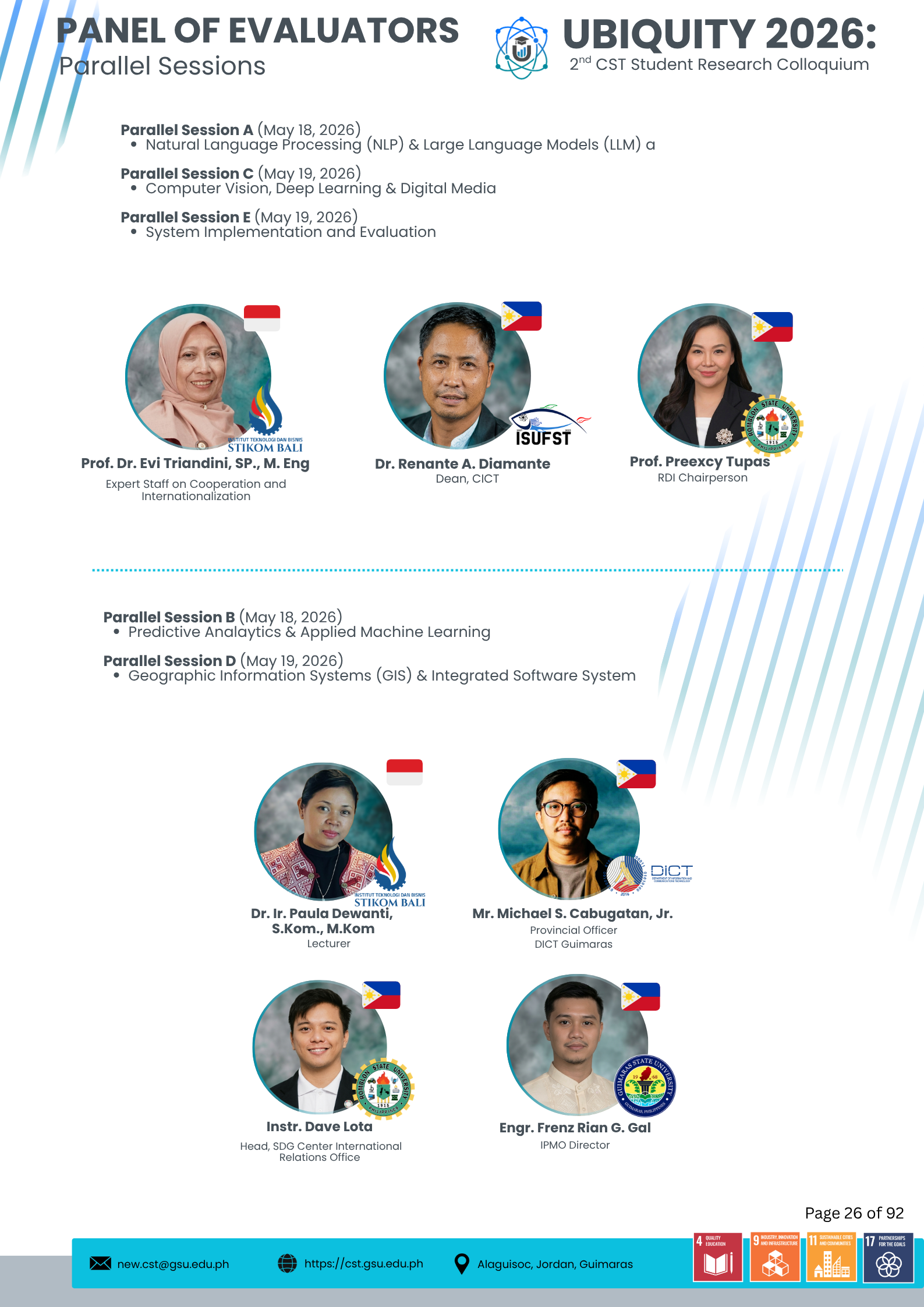
Prof. Dr. Evi Triandini, SP., M. Eng
International Expert Staff, ITB Stikom Bali

Dr. Ir. Paula Dewanti,
S.Kom., M.Kom
Lecturer, ITB Stikom Bali
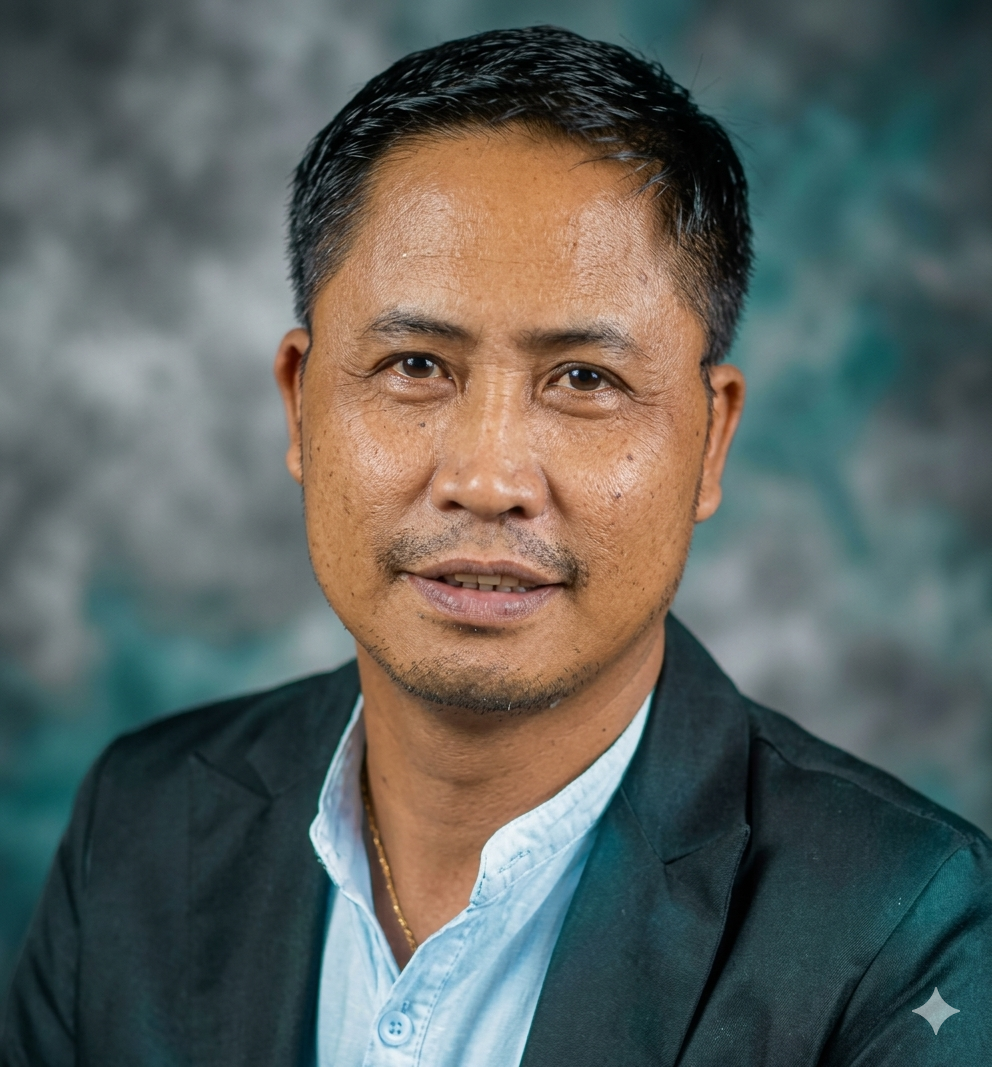
Dr. Renante A. Diamante
Dean, CICT, Iloilo State University of Fisheries Science and Technology

Mr. Michael S. Cabugatan, Jr.
Provincial Officer
DICT Guimaras

Engr. Frenz Rian Gal
IPMO Director, Guimaras State University

Dave Lota
Instructor II, Head, SDG Center International Relations Office, RSU
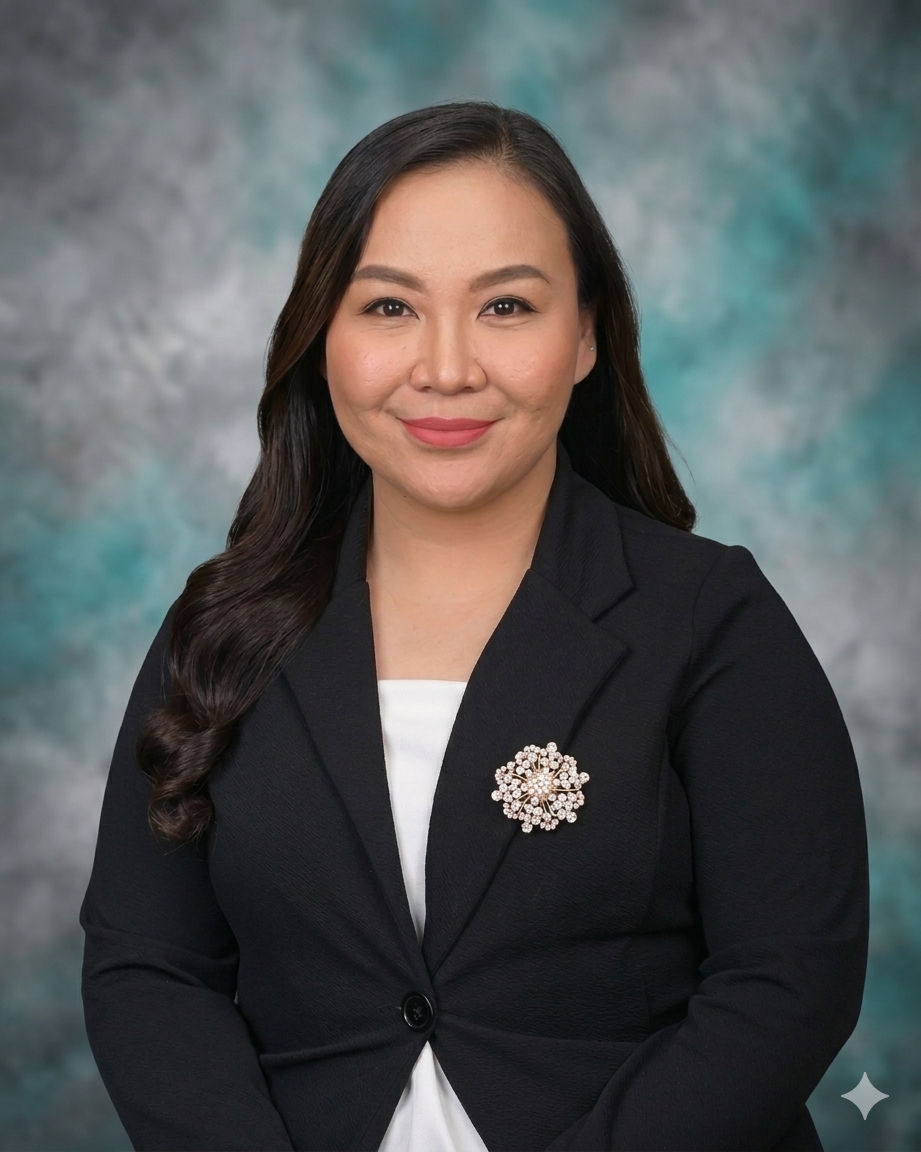
Preexcy Tupas
Assistant Professor II – RDI Chairperson, RSU
This event is made possible through the following significant offices and agencies:




FAQs
Why there is Ubiquity 2026:2nd CST Student Research Colloquium?
Pursuant to CHED CMO 25, series of 2015 specifically Annex A, Article II, Section 8 states that “Thesis and Capstone project must be presented in a public forum. This forum may be an international, national, regional or school-based conference, meeting, or seminar that is announced and open to interested parties. This may be separate from the presentation before the Panel mentioned in Section 6. A school-based colloquium organized for this purpose would suffice to satisfy this requirement . Presentation in a public forum, such as the National Conference on IT Education (NCITE) of PSITE is encouraged“
What is/are the Policies, Standards and Guidelines that governs the BSIT, BSIS and BSCS Programs?
The PSGs that governs the three program offerings under the College of Science and Technology: BSIT, BSIS and BSCS is CHED CMO No. 25, series of 2015
Who can join in the Ubiquity 2025:1st CST Student Research Colloquium?
The Ubiquity 2026: 2nd CST Student Research Colloquium is open to all CST Students who are about to graduate this Academic Year 2025-2026 provided they are officially enrolled in any of the program offerings of the College of Science and Technology.
Why join the Ubiquity 2026: 2nd CST Student Research Colloquium?
- Collaborate and Connect
- Engage with fellow researchers, mentors, and peers to build networks that spark future collaborations.
- Showcase your Innovations
- Present your projects and inspire the next generation of CST student researchers by sharing your ideas and discoveries.
- Immerse in Research and Development
- Expperience the dynamic world of research, intellectual exploration and innovation that drives academic and societal progress.
Criteria for Best Thesis Award
This award acknowledges a presenter who effectively communicates their research, engages the audience, and clearly articulates the significance and implications of their work.
| Originality and Innovation Novelty of Research: Does the thesis introduce new concepts, methodologies, or approaches? Creativity: How innovative are the solutions or insights presented? Contribution to the Field: Does the research significantly advance knowledge or practice in computing? | 30% |
| Methodology and Execution Soundness of Methodology: Are the research methodsappropriate, well-defined, and rigorously applied? Data Analysis: Is the analysis thorough, accurate, andproperly interpreted? Technical Proficiency: Does the thesis demonstrate strong technical skills in its implementation and execution? | 25% |
| Relevance and Impact Alignment with Theme: How well does the thesis address”Computing Beyond Boundaries: Reshaping Tomorrow’s Digital Landscape”? Potential Impact: What is the potential real-world or academic impact of the research findings? Applicability: Are the findings practical or adaptable to future work? | 20% |
| Clarity and Organization Structure: Is the thesis logically organized and easy to follow? Writing Quality: Is the language clear, concise, and professional, free from grammatical errors and typos? Referencing: Are sources properly cited and bibliography complete? | 15% |
| Results and Conclusion Clarity of Findings: Are the results presented clearly and effectively? Validity of Conclusions: Are the conclusions well-supported by the data and analysis? Future Work: Are logical and insightful directions for future research identified? | 10% |
| TOTAL | 100% |
Criteria for Best Presenter Award
| This award acknowledges a presenter who effectively communicates their research, engages the audience, and clearly articulates the significance and implications of their work. | |
| Clarity and Cohesion Understandability: Is the presentation easy to understand for an audience with varying levels of familiarity with the topic? Logical Flow: Is the presentation well-structured with a clear introduction, body, and conclusion? Key Message: Is the main point of the research clearly conveyed? | 30% |
| Engagement and Delivery Enthusiasm: Does the presenter show passion andinterest in their topic? Eye Contact and Body Language: Is the presenter confident and engaging?Voice Modulation: Is the speaker’s voice clear, audible, and varied in tone?Time Management: Does the presenter adhere to the allotted time? | 25% |
| Visual Aids Effectiveness: Do the slides or other visuals enhance understanding without overwhelming the audience? Design Quality: Are the visuals professional, aesthetically pleasing, and easy to read?Minimalism: Are the slides free from excessive text and distracting elements? | 20% |
| Content Knowledge and Responsiveness Depth of Understanding: Does the presenter demonstrate a thorough grasp of their research?Q&A Session: Are questions answered confidently, clearly, and thoughtfully?Defense of Work: Can the presenter effectively defend their methodology and conclusions? | 25% |
| TOTAL | 100% |
Criteria for Best Poster Award
| This award celebrates a poster that effectively communicates complex research in a visually appealing, concise, and informative manner, inviting engagement and discussion. | |
| Visual Appeal and Layout Aesthetics: Is the poster visually appealing, well-designed, and professional?Readability: Is the font size appropriate, and is the text easy to read from a distance? Organization: Is there a clear, logical flow of information that guides the viewer’s eye?Use of Space: Is the space utilized effectively, avoidingclutter or excessive blank areas? | 30% |
| Content Clarity and Conciseness Summary: Does the poster effectively summarize the research problem, methodology, results, and conclusions? Key Messages: Are the main findings easily identifiable? Conciseness: Is the information presented succinctly, without unnecessary jargon or lengthy paragraphs? Alignment with Theme: How well does the poster connect to “Computing Beyond Boundaries: Reshaping Tomorrow’s Digital Landscape”? | 30% |
| Graphics and Visuals Relevance: Do the images, charts, and diagrams directly support and enhance the understanding of the content? Quality: Are the visuals high-resolution, clear, and well-labeled? Impact: Do the visuals help convey complex information quickly and effectively? | 25% |
| Engagement and Discussion Stimulates Interest: Does the poster invite questions and encourage discussion with the presenter? Accessibility: Is the information presented in a way that is accessible to a broad audience? Presenter Interaction: How well does the presenter use theposter as a tool for explanation and interaction during the poster session | 15% |
| TOTAL | 100% |
Event Evaluation
Event Evaluation
Your feedback matters. Help us improve this Student Research Colloquium by responding to our evaluation form. To access, you may use the following options:
Thank you for your participation!